
Nanopark, branding, nanotechnology
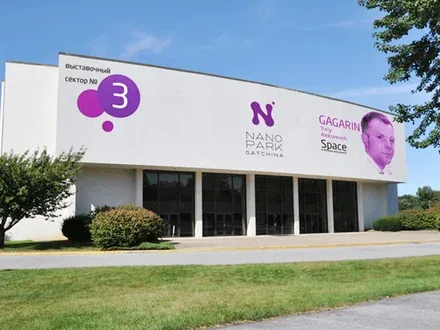
Combining the features of greenfield and brownfield sites, Nanopark Gatchina was meant to bring together on a single site a range of residents engaged in both R&D and the manufacture of products with a nano component. In the vision of the project's ideologists, interaction between residents was to create opportunities for synergy and mutual enrichment. The aim of the project was to develop a brand for a science and industrial park intended for cutting-edge innovation activity in partnership with the largest research centres both in Russia and abroad.
To answer the key questions about the structure and specifics of the project, the pool of residents, the mechanism for attracting them and the commercialisation of start-ups, Brandson specialists conducted detailed research. We spoke with analysts, experts in the innovation economy, representatives of the Association of Industrial Parks, consultants and heads of research and production enterprises. A deeper understanding of the nano industry was achieved through a series of strategic sessions with the project's ideologists and curators, as well as by turning to business literature devoted to institutional modelling of innovation-driven development. According to the experts we surveyed, in the context of globalisation the traditional division of the economy into sectors or industries is losing its relevance. Clusters, systems of interrelationships between firms and organisations, are coming to the fore, as Michael Porter, among others, has written. An important feature of a cluster is its orientation towards innovation. The most successful clusters form where a "breakthrough" in technology and production techniques is taking place or expected, with a subsequent move into new "market niches". In the situation of the "third industrial revolution", the greatest share of resources is spent not on making the end product but on developing it. As a result, the role of scientists, researchers and innovators is changing too. Whereas previously the path from discovery to technological breakthrough took entire generations, today this cycle takes place within a timeframe that allows inventors to participate both in the research process and in the stage of implementing innovations. There are also local particularities of development. Russia, and the Leningrad Region in particular, also has a number of significant particularities. Specifically, to date, owing to a certain inertia in the Russian economy, the greatest success has been achieved by projects creating industrial parks on greenfield and brownfield sites. However, the Nanopark Gatchina project was conceived from the outset as a fully-fledged technology park: a property complex uniting research institutes, industrial facilities, business centres and exhibition venues. The task of a technology park is to simplify the creation and growth of innovative companies through incubation processes and the spinning off of new companies (so-called spin-offs) from existing ones. Technology parks are more elite and more important for the innovation economy than the more widespread industrial parks, but creating them requires a well-thought-out concept and significant financial investment. In particular, the plans for Nanopark Gatchina include the creation of a laboratory and a business incubator.
A networked, interface-based model helps to build relationships between residents within clusters in the shortest possible time, and to organise links between innovative companies and science and education. The "knowledge economy" paradigm assumes that universities become the centre of innovation, i.e. the "engines" of the entire innovation process on a par with enterprises and the state. This concept, formulated by Henry Etzkowitz, became known as the "triple helix". Accelerating interaction between market participants in the industry through the exchange of knowledge, technology, experience and innovative developments serves as a driver of research activity. That, in turn, stimulates the development of innovation-oriented industry. In addition, resident companies in technology parks are exempt from property tax and pay a reduced rate of profit tax, thereby optimising their costs. As a result of the research, we concluded that Nanopark Gatchina should be positioned as the flagship project within the North-West pilot innovation cluster for the pharmaceutical and medical industries and radiation technologies. As a showcase of the Russian nano industry, the project supports the business adaptation and commercialisation of products from small innovative enterprises. The main task of Nanopark Gatchina is to build the infrastructure of the nano industry, to provide technical, informational and consulting support for start-ups, and to help small enterprises find investors and partners.
BRAND PLATFORM The brand platform we developed establishes that Nanopark Gatchina is a kind of hub uniting a promising intellectual environment (a platform for exchanging knowledge, ideas, competencies and initiatives), the infrastructure for testing them and launching them into series production, and enterprises where series production has been set up. In essence, it is a kind of ecosystem, a single interface in which ideal conditions have been created for the birth and growth of innovative technologies and their rapid implementation in real business, as well as for face-to-face communication that expands the opportunities for cooperation and for finding new partners. The mission of the Nanopark Gatchina brand is to serve as a conduit between innovation, business and the state, creating opportunities for the successful development of the knowledge economy and for unlocking the potential of talented Russian specialists within our country. By providing comprehensive support, from equipment and infrastructure to accounting, centralised marketing and promotion, help in finding investors and other service functions, the Gatchina nanocentre helps Russian scientists and young specialists realise the commercial potential of their technologies. The word "artel" comes from the Italian artiere, "craftsman", a concept that in turn derives from the Latin root ars (gen. artis), "craft, occupation; art, science". Historically, the artel made it possible to combine the Russian inclination towards independent and even solitary work with collective effort. The first artels appeared in Gatchina as early as the 19th century, on the basis of industrial manufactories (for example, the Cloth Manufactory, located in the very centre of Gatchina at 2 Dostoevsky Street). Throughout the 20th century, various artels continued to exist in Gatchina, the best known of which, Jupiter, produced drilling machines and presses. Today the production floor lives in the minds of developers, design engineers, technologists and programmers, but a sense of camaraderie remains essential for effective collaborative work. In the new environment, it is precisely this that becomes the key to the very synergy that makes it possible to achieve results of a new quality. NAMING Nanopark Gatchina is an innovation and technology park that is part of a network of nanocentres. However, the nanocentre in Gatchina, associated with radiation technologies, is unique. That is why the park was given its own name, which clearly and unambiguously refers both to its field of activity (nanotechnology) and to its geographical landmark (Gatchina). BRAND IDENTITY The visual attributes of the new brand, from the logo to the well-developed internal wayfinding system, are subordinated to a single brand strategy: a modern artel acting as a kind of interface for innovative business. Its core qualities are adaptability, plasticity and technological sophistication. A dynamic identity built around a signature pattern: a set of elementary particles which, as they interact with one another, continuously form contours and meanings. The pattern, overlaid on various objects of the physical world, resembles the fractal lattices used to model various processes, including phenomena on the scale of 10−9, the scale referred to by the prefix "nano". This kind of cognitive visualisation helps to better understand the ideology of the Gatchina nanocentre, emphasising the innovative and unique character of the brand.